Understanding the Chinese Practice Paper Notebook KDP Template
The journey of learning Chinese writing, whether for oneself or for guiding a child, is deeply practical. It requires repetition, structure, and the right tools to build muscle memory and visual understanding of character composition. In the realm of physical practice aids, the Chinese Practice Paper Notebook is a fundamental resource. For creators looking to publish such a resource, particularly on platforms like Amazon KDP, a specialized Chinese Practice Paper Notebook KDP Interior template becomes a critical starting point.
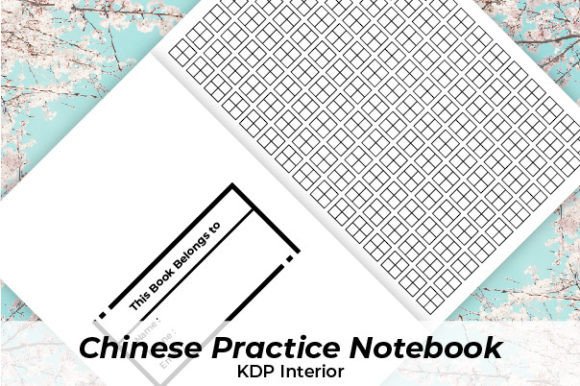
At its core, a KDP template for this niche is a pre-designed, print-ready digital file package. It typically contains the precise layout of what is known as Tian Zi Ge paper—the grid paper with a central square and crosslines used to guide the proportions and placement of each Chinese character. This Kdp bundle is distinct from a simple image or a basic PDF; it is a comprehensive set of source files allowing for professional adaptation and resizing, meant for those who intend to produce a physical notebook for sale.
What Distinguishes a Professional KDP Interior Package
When evaluating options for creating a Tian Zi Ge Practice Book, the quality and utility of the digital template are paramount. A robust Chinese Practice Paper KDP Interior package goes beyond providing a single static image. It offers editable source files, such as AI (Adobe Illustrator) and EPS vector files. This allows a creator with design software to modify margins, adjust line thickness, or even integrate additional instructional elements without degrading quality.
The inclusion of multiple file formats—SVG, PNG, JPG, and PDF—serves different purposes. Vector files (EPS, SVG) ensure the grid remains crisp at any size, crucial for resizing the interior from a standard 6x9 inches to other trim sizes. The high-resolution 300 DPI raster files (PNG, JPG) provide ready-to-use images for other projects. The print-ready PDFs, often provided in common page counts like 100 or 120 pages, are the final files one uploads directly to KDP for printing. This versatility is a significant strength, comparing favorably to simpler options that might only offer a non-editable PDF, locking the creator into a single format.
Tradeoffs and Considerations in Template Selection
The decision to use a pre-made Kdp template versus designing a Chinese Writing Practice Notebook interior from scratch involves clear tradeoffs. The primary benefit of a professional template is time and technical certainty. Designing perfectly aligned, consistent Tian Zi Ge grids that meet KDP's precise bleed and margin requirements requires graphic design expertise. A high-quality template eliminates that technical hurdle, allowing educators, language tutors, or savvy parents to focus on publishing rather than design.
However, this approach has a natural limitation: standardization. While resizing is possible, the fundamental layout is set. If your vision for a Chinese Workbook For Kids includes unconventional grid sizes, integrated Pinyin guides on every page, or progressive difficulty levels changing the grid structure throughout the book, a basic template might be insufficient. In such cases, the editable vector source files become essential. A template offering only PDFs would be a poor fit, whereas one with AI or EPS files allows for that deeper customization, bridging the gap between a ready-made solution and a custom design.
Comparing the KDP Template to Other Practice Resources
It's useful to situate the Chinese Practice Paper Notebook KDP template within the broader ecosystem of Chinese writing tools. It is not the practice resource itself, but the blueprint for creating a physical, blank practice notebook. This contrasts with:
- Pre-filled Practice Books: These are workbooks with specific characters or exercises to copy. The KDP template produces a No Content Book—a blank slate for free practice.
- Digital Apps or Software: These offer interactive character writing, often with stroke order animation. The template's output is analog, catering to the tactile experience many learners and educators believe is vital for memorization.
- Free Printable PDFs: One can find single-page Tian Zi Ge sheets online. The KDP template package is geared towards producing a cohesive, bound commercial product with professional print quality, not a one-off printable.
The choice here depends entirely on the end goal. For a learner simply needing occasional paper, free printables might suffice. For a teacher creating custom worksheets, a single editable file could be ideal. For an author or publisher aiming to sell a reusable, high-quality Practice Notebook on a major platform, the comprehensive KDP interior bundle addresses the specific technical and commercial requirements.
When is This KDP Template the Right Fit?
The Chinese Writing Kdp Template is optimally suited for specific scenarios. First, it is an excellent resource for independent KDP publishers who identify a demand in the market for blank practice paper. Perhaps they notice a lack of properly formatted Traditional Chinese Writing Practice Notebook For Kids in a desired trim size. Using the template allows for rapid, professional product creation.
Second, it fits educators or language institutes that wish to produce branded practice materials for their students without investing in custom design services. With the editable files, they can add a school logo or name to the cover page. Third, it serves heritage communities or parents who want to create a bespoke Chinese Writing Practice Book For Kids for home use, perhaps combining the practice paper with family-created character lists, and value the option of professional printing.
When Might Another Option Be Necessary?
Despite its utility, this template approach may not be the best answer in all situations. If the project requires integrated content—for instance, a Chinese Character Practice Book For Kids that progresses from basic strokes to full characters with instructions on each page—then a more comprehensive interior design is needed. One might start with the template's grid as a base layer but must invest time in adding all textual content.
Furthermore, if the goal is purely digital distribution—an e-book or an interactive PDF—the print-ready specifications (300 DPI, specific trim size) of the KDP package are less relevant. A simpler, screen-optimized grid design would be more efficient. Finally, for those with advanced graphic design skills and time, building a Tian Zi Ge grid from scratch in design software offers total creative freedom, making a pre-made template an unnecessary purchase.
Key Decision Factors for Publishers and Creators
When researching and comparing Kdp Interior options for a Chinese writing project, several practical factors should guide the decision.
- File Format Diversity: Does the package provide the vector source files necessary for your potential customization needs, or only final outputs?
- Page Count and Resizing: Are the provided PDFs in a page count that matches your vision? Is the grid truly easily resizable without quality loss, as advertised?
- Technical Print Readiness: Are the margins, bleeds, and page dimensions correctly configured for KDP's requirements, eliminating the risk of printing errors?
- Use Case Alignment: Does the template produce the type of book you intend? Some are strictly for blank Tian Zi Ge Paper, while others might include hybrid pages with additional guides.
Evaluating these factors helps move beyond a generic search for a "Chinese Practice Notebook" to finding a production tool that matches your specific project's scope, skill level, and end goals. A balanced view recognizes that a premium template saves immense time and ensures print quality but may involve a cost. Conversely, free or simpler alternatives carry lower upfront barriers but demand greater technical investment and risk lower final product quality.
The Chinese Practice Paper Notebook KDP template ecosystem, therefore, serves a vital role in democratizing the production of specialized educational tools. It enables non-designers to create professional practice resources, filling a niche between mass-produced stationery and fully custom designed workbooks. By understanding its distinct composition, strengths, and inherent tradeoffs against other approaches, creators can make an informed choice that best supports their effort to provide a tangible, structured aid for the intricate art of Chinese character writing.