The Daily Time Sheet Log Book KDP Interior: A Professional's Guide to Evaluating Publishing Tools
For anyone exploring the world of independent publishing through Amazon's Kindle Direct Publishing (KDP) platform, creating a professional, functional interior for a book is a critical step. Among the many resources available, the Daily Time Sheet Log Book - KDP Interior represents a specific category of product designed to streamline this process. This pre-formatted interior is not a completed book itself, but a template—a ready-to-use framework that allows creators to quickly produce a low-content or no-content book ready for sale.
Understanding the KDP Interior Concept
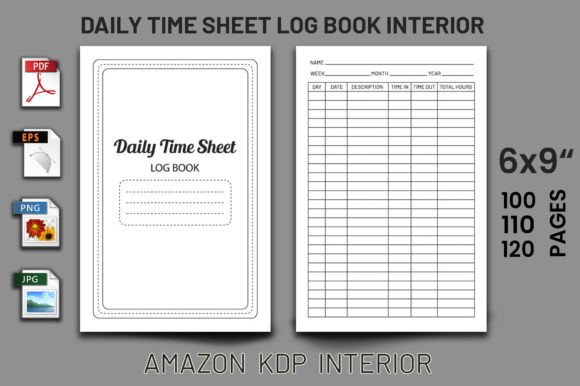
Amazon KDP has popularized the concept of low-content books, which include journals, logbooks, planners, and workbooks. These products provide structure and utility without extensive written narratives. The Daily Time Sheet Log Book KDP Interior falls squarely into this niche. It is a digital file package, typically containing a PDF formatted to the standard 6" x 9" trim size, that features a pre-designed layout of daily time sheet pages.
What distinguishes this from simply designing your own in a word processor is the specific testing and optimization. As the specifications note, it is "100 tested on Amazon KDP." This implies the file has been uploaded to the KDP system to validate that it meets all technical requirements for print quality, margins, and sizing, eliminating a common hurdle for new publishers. The inclusion of source files (like EPS or PNG) also indicates it is meant for customization, allowing a user to modify colors or add branding before final upload.
Core Features and Practical Tradeoffs
Evaluating this tool requires understanding its stated features and the inherent tradeoffs they present.
Standardization and Reliability
The primary benefit of a pre-tested Daily Time Sheet Log Book KDP Interior is reliability. The trim size, page count options (100, 110, 120 pages), and no-bleed design are parameters known to work within KDP's printing system. This removes the anxiety of technical rejection and ensures a consistent print result. For an individual with no graphic design experience, this assurance is significant. The tradeoff, however, is in originality. Using a widely available interior template means your book's internal layout will be identical to others using the same file, potentially impacting its uniqueness in a crowded marketplace.
Speed Versus Customization
This product is engineered for speed. You can purchase the file, make minimal adjustments if desired, and upload it to KDP to create a listing in a very short timeframe. This is ideal for testing market ideas or building a portfolio of low-content products efficiently. The provided source files offer a middle ground—they allow for some customization of graphical elements, but the fundamental page layout (the time sheet structure) remains fixed. If your vision requires a radically different time-tracking format, such as weekly overviews instead of daily sheets, or integrated invoicing sections, this interior may not be the right fit. In that case, a more flexible approach, like hiring a designer or using advanced layout software, becomes a necessary alternative.
Quality Assumptions and Limitations
The term "High-Quality Print Ready PDF" sets an expectation of professional output. For a user, this means the lines, text, and any graphic elements are crisp and correctly aligned. However, the final print quality also depends on your customization choices. If you add low-resolution images or use incompatible fonts during editing, you can degrade that initial quality. The interior provides a strong foundation, but it is not a foolproof guarantee against all user-error.
Comparing Approaches to Creating a Time Log Book
When considering how to produce a daily time sheet log book for KDP, several paths exist. Placing the Daily Time Sheet Log Book KDP Interior alongside these alternatives clarifies its best-use scenarios.
One alternative is complete self-design using software like Adobe InDesign, Canva, or even Microsoft Word. This approach offers maximum creative control. You can define every column, label, and spacing to match a specific professional or personal use case. The tradeoff is immense time investment, a steep learning curve for complex software, and the risk of technical failures during KDP uploads. This path suits those with design skills or a very unique product vision.
Another route is using more generalized KDP interior templates. These might be multipurpose journal interiors or blank grid templates. With these, you would need to add the time sheet structure yourself, effectively building the log pages within the template. This offers more flexibility than the specific Daily Time Sheet product but requires more work and design decision-making. It's a hybrid option for someone who wants a unique structure but appreciates a pre-formatted page size and margin framework.
Finally, there is the option of commissioning a custom interior from a graphic designer. This is the highest-cost alternative but results in a completely unique, professionally crafted file tailored to exact specifications. This is the appropriate choice for established publishers looking to build a distinctive brand or address a very niche audience with specialized needs that off-the-shelf templates cannot meet.
Identifying the Right Fit for Your Project
The decision to use the Daily Time Sheet Log Book KDP Interior hinges on your goals, resources, and the market you intend to serve.
When This KDP Interior Is a Strong Choice
- For Rapid Market Entry: If your objective is to quickly list a functional, clean time log book on KDP to assess demand or to add a product to your store, this interior eliminates weeks of design and testing work.
- For Beginners Without Design Expertise: New publishers who understand the KDP process but lack graphic design confidence will find the pre-tested, ready-to-upload nature of this product a safe and educational starting point.
- For Supplementary or Volume Publishing: If you plan to create a series of low-content books (e.g., a time sheet log, a expense tracker, a contacts journal), using reliable, purchased interiors for each can streamline the production of your entire catalog.
- When the Standard Layout Suffices: The classic daily time sheet format—with spaces for date, project, start/end times, notes—is universally understood. If your target audience is general freelancers, students, or hourly workers, this standardized layout is often perfectly adequate.
When to Consider Other Options
- For Brand Differentiation: If you are building a publishing brand where visual identity is key, and you need your books to have a cohesive, unique look across all interiors, a custom design or heavily modified template is necessary.
- For Specialized Professional Use: Certain professions require specific time-tracking fields (e.g., legal case codes, medical procedure codes, construction site IDs). A generic Daily Time Sheet Log Book KDP Interior may lack these, making a custom design more appropriate.
- When Cost is a Primary Constraint: While these interiors are affordable, the absolute lowest-cost approach is to use free software and KDP guidelines to create a basic file yourself. This carries higher risk of rejection and time cost, but no direct financial cost for the template.
- For Integrated Digital Offerings: If your product concept extends beyond print—for example, if you intend to pair the physical log book with a digital spreadsheet or app—the internal structure of the book might need to be designed to facilitate that synergy, pushing beyond a standard template.
Making an Informed Decision
Choosing any publishing tool involves weighing factors of time, money, skill, and final product goals. The Daily Time Sheet Log Book KDP Interior is a tool optimized for efficiency and reliability within a defined creative scope. Its value is most apparent when you prioritize a fast, professional launch of a product that follows a conventional format.
Before committing, it is prudent to examine samples of the interior if available, to verify the exact layout and column headings. Consider if the page count options align with your vision—a 100-page book versus a 120-page book offers different perceived value to customers. Also, assess your willingness to customize the provided source files; if you plan to modify them, ensure you have access to and familiarity with the software needed (like Adobe Illustrator for EPS files).
In the broader landscape of KDP publishing resources, products like the Daily Time Sheet Log Book KDP Interior serve as bridges. They bridge the gap between an idea and a market-ready product, between amateur enthusiasm and professional presentation. They are not a one-size-fits-all solution, but for a significant range of aspiring and established publishers, they represent a balanced, practical choice that mitigates risk while delivering a functional, saleable book. By understanding both its capabilities and its constraints, you can better determine if it is the right resource for your specific publishing journey.