Your Intermittent Fasting Journey Starts With the Right Journal
Starting an intermittent fasting routine is a commitment to your health, but maintaining it requires clarity and consistency. That’s where a dedicated journal becomes indispensable. For creators, entrepreneurs, and small business owners looking to tap into the wellness niche, an Intermittent Fasting Journal KDP product offers a streamlined path to market. However, simply having a journal template isn’t enough. The real value lies in understanding what makes a journal genuinely helpful for the user and, consequently, successful for you as a publisher.
The Common Oversight: Focusing Only on Page Count
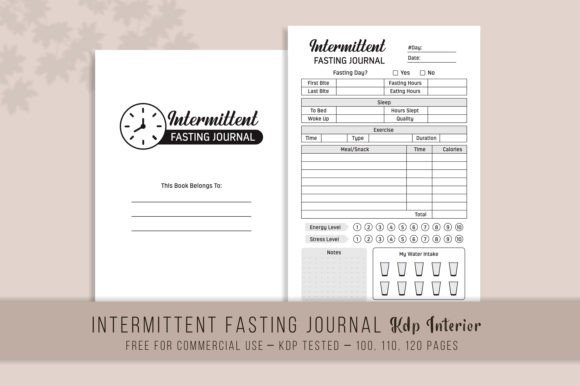
A frequent mistake when evaluating or selecting an Intermittent Fasting Journal KDP interior is getting fixated on the number of pages listed—like 100, 110, or 120. While page count matters for pricing and perceived value, it’s a surface-level metric. The true utility comes from how those pages are structured. A journal packed with 120 pages of repetitive, poorly-designed logs will frustrate users and likely lead to abandoned fasting plans. Conversely, a 100-page journal with intelligently organized sections for weekly goals, meal reflections, hydration tracking, and progress notes can become an essential companion.
The impact here is on both satisfaction and results. A user who finds the journal confusing or limiting is less likely to stick with it, diminishing the product's effectiveness. As a publisher, offering a product that doesn’t genuinely support the user’s journey can affect reviews and long-term sales. Instead of just counting pages, examine the layout. Does it logically guide someone through a fasting window? Are there prompts for noting energy levels or cravings? These functional details turn a blank book into a strategic tool.
Neglecting the User's Starting Point
Many ready-made journals are designed with a generic approach, assuming all users are at the same level. This overlooks the vast audience range, from complete beginners to seasoned fasters. A beginner needs clear explanations of fasting methods (like 16/8 or 5:2), simple daily checkboxes, and space for initial questions. A more advanced practitioner might want detailed macros tracking, exercise integration, and longer-term trend analysis. A common publisher error is providing a one-size-fits-all KDP interior without considering these distinct needs.
This mismatch affects usability. A beginner faced with complex charts may feel intimidated, while an advanced user might find a basic log insufficient. The practical advice is to either choose a journal interior that clearly targets a specific experience level or, if creating your own, to segment your product line. For example, you could offer a “Beginner’s Guided Intermittent Fasting Journal” and an “Advanced Fasting & Nutrition Tracker.” This specificity helps users make the right choice and increases the perceived helpfulness of your KDP offering.
Why “KDP Tested” Should Mean More Than Just Format
Seeing “KDP Tested” on a product listing is reassuring, but it’s often interpreted only as technical compatibility—the file uploads without errors. What’s frequently missed is the user experience test. Has the interior been evaluated for actual pen-and-paper use? Are the margins adequate for comfortable writing? Is the font size in any headers legible? Does the PDF print cleanly on home printers? Ignoring these practical details can lead to a product that is technically approved by KDP but practically frustrating for the end consumer.
Before committing to an Intermittent Fasting Journal KDP interior, scrutinize the sample. Print a few pages yourself. Write on them. Check if the line spacing is too tight or if boxes meant for checkmarks are too small. This hands-on check prevents the costly mistake of selling a journal that looks good on screen but is awkward in hand. It builds trust; customers who receive a physically optimized product are more likely to become repeat buyers for your other low-content books.
The High-Resolution Promise and Print Reality
“High-Resolution interiors” is a standard feature listing, essential for crisp graphics and clean text. However, a misunderstanding occurs when publishers assume high-resolution only matters for color or intricate designs. Even a minimalist, black-and-white fasting journal relies on sharp lines and unblemished text. A low-resolution file might produce faint, blurry, or broken borders on tracking tables, degrading the professional feel.
The effect is on perceived quality and value. A journal that prints poorly feels cheap, undermining the user's commitment to a serious health practice. Your corrective action is straightforward: always request or examine a full-size PDF preview at 100% zoom. Look at the thinnest lines and smallest characters. Ensure they are solid and clear. This attention to detail elevates your product above competitors who overlook the print fidelity of their KDP interiors.
Source File Access: Beyond Immediate Upload
Receiving an EPS source file is a significant advantage, often highlighted for its editing flexibility. Yet, many buyers overlook its long-term strategic value. They see it only as a ticket for immediate upload to Amazon KDP. The better approach is to view this file as a foundation for brand expansion. Perhaps your Intermittent Fasting Journal sells well; with the source file, you can efficiently create companion products—a fasting recipe planner, a weekly wellness companion, or a version with adjusted trim sizes for different markets.
Not leveraging the source file limits business growth and adaptability. If you base your KDP business on a single journal upload, you’re missing opportunities to build a cohesive suite of products that cross-promote and retain customers. Before purchase, verify that the source file is indeed editable in common vector software and that you have the rights to modify it. This turns a one-time purchase into a sustainable asset for your low or mid-content business.
Choosing the Right Trim Size: A Balance of Form and Function
The 6 x 9 inches trim size is popular and practical, but it’s not automatically the best choice for every fasting journal purpose. The mistake is selecting it by default without considering user portability and desk use. A 6x9 journal is excellent for detailed logging but might be bulky for carrying daily in a small bag. Conversely, a 7x10 size offers more writing space for those who journal extensively at home.
This choice affects the product's market fit. A journal touting convenience for busy professionals might actually be more appealing in a slightly more portable 5.5x8.5 format. Before finalizing your Intermittent Fasting Journal KDP product, research what similar successful journals use and think about the primary use case. Is it a bedside journal or a daily carry-along? Aligning trim size with function makes your product feel thoughtfully designed, not just templated.
Ultimately, the goal of an Intermittent Fasting Journal KDP interior is to serve two parties perfectly: the end user who relies on it for their health journey, and you, the publisher, who builds a reputable, profitable business. By moving beyond basic specifications and considering real-world application, you avoid the common pitfalls that lead to stagnant products. You create a journal that is not just a blank book, but a guided framework for success. This thoughtful approach saves you time in the long run by building a product that requires fewer revisions, garners better reviews, and makes your entrepreneurial life in the KDP space genuinely easier.