The Ultimate Guide to KDP Fitness Planner Interiors
For entrepreneurs and content creators looking to publish on Amazon's Kindle Direct Publishing platform, a niche product like a fitness planner represents a significant opportunity. The market for self-improvement tools is vast, and a well-designed planner can serve as a crucial aid for individuals committed to their health journey. This article explores the core components, practical applications, and strategic considerations of creating a Daily Fitness Planner Interior for KDP, focusing on the downloadable package that includes PDF files, PNG images, and a fully formatted 110-page layout.
Decoding the Interior Package Specifications
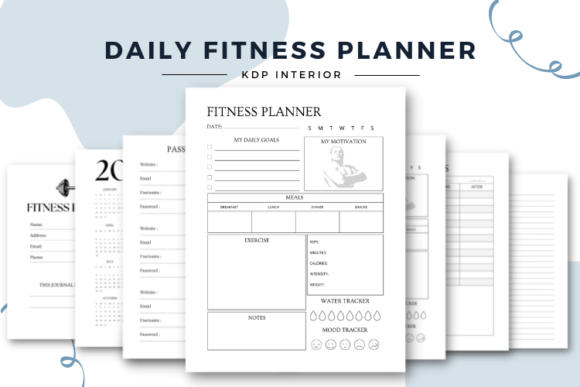
The provided package details offer a blueprint for a professional product. Understanding each element is key for both the creator and the potential user. The PDF Files interiors Ready for upload to KDP or print signify that the core product is a digital file formatted to Amazon's strict specifications, ensuring a smooth publishing process. The inclusion of PNG files likely refers to individual page elements or cover graphics, offering flexibility for marketing or minor customizations. The large size of 8.5 × 11 inches is the standard US letter format, ideal for both digital viewing and physical printing if a user chooses to do so.
A critical specification is No bleed. In print design, bleed refers to artwork that extends beyond the edge of the page to avoid unwanted borders after trimming. A "no bleed" designation means the interior is designed specifically for the KDP digital upload environment or for home/office printing on standard paper, where precise edge trimming isn't required. This simplifies the file and makes it universally usable.
Core Pages and Their Functional Roles
The 110-page structure is where the planner's value truly materializes. Each listed component serves a distinct purpose in a holistic fitness management system.
- Info Page: This acts as the welcome and instruction manual, setting the tone and explaining how to best utilize the planner.
- Calendar 2023: A yearly overview provides macro-planning ability, allowing users to set annual fitness goals, mark milestone dates, and see their journey in the context of a full year.
- Password Tracker: An often-overlooked but practical inclusion, this page acknowledges the digital life of users. It helps securely record login details for fitness apps, online coaching portals, or nutrition websites, integrating digital tools with the analog planning process.
- Notes: Blank or lightly structured note pages are essential for freeform journaling. Users can record observations about energy levels, sleep patterns, dietary reactions, or motivational thoughts that don't fit into standardized logs.
- Fitness Planner: This is the daily or weekly engine of the product. It typically includes spaces for logging workouts, exercises, sets, reps, weights, and cardio details. It transforms intention into recorded action.
- Progress Planner: Separate from the daily log, this section focuses on tracking long-term metrics over weeks or months. It might include charts for body measurements, strength goals, endurance improvements, or consistency tracking, visualizing progress to combat motivation plateaus.
Real-World Applications for Diverse Users
The utility of such a planner interior extends far beyond a single user type. Its design supports a wide spectrum of applications.
For the individual consumer, it offers a structured yet adaptable system to reclaim ownership of their fitness regimen. Instead of scattered app notifications and disjointed notes, everything resides in a single, dedicated document. The physical act of writing can enhance commitment and mindfulness. For the hobbyist fitness enthusiast, the progress tracker and notes pages become a personal research log, helping them correlate different training styles with results.
Educators, such as personal trainers or wellness coaches, can utilize this interior as a client tool. They might provide it as part of a coaching package, guiding clients to fill out the fitness planner pages as homework. The shared calendar and progress sections then become focal points for review sessions, making progress tangible. For professionals in the wellness industry, creating and selling such a planner on KDP can be a way to expand their brand and reach, offering a scalable digital product alongside one-on-one services.
Business owners in the publishing space see this as a ready-to-market product. The Ready for upload or print nature means minimal overhead; once purchased or created, it can be uploaded to KDP and made available globally without inventory, shipping, or handling concerns. It represents a turnkey asset in a thriving self-help marketplace.
Key Advantages of a Pre-Designed KDP Interior
Choosing a pre-designed interior package, like the one described, presents several compelling advantages over starting from a blank page.
First, it eliminates the formidable barrier of technical design. Creating 110 pages with consistent formatting, functional layouts, and KDP-compatible specifications requires expertise in software like Adobe InDesign or advanced PDF manipulation. A ready-made interior allows creators to focus on marketing, customer research, and business strategy rather than graphic design.
Second, it ensures compliance and reduces risk. Amazon KDP has precise requirements for file dimensions, resolution, and margins. An interior that is already Ready for upload minimizes the chance of rejection or publishing delays due to file errors. This reliability is crucial for time-sensitive projects or for creators new to the platform.
The promise that you can easily download and edit it and use it without any problem speaks to flexibility. While ready for immediate use, it is often provided in an editable format (like with open-source PDF editors or design software), allowing for customization. A creator might add their logo, adjust some color schemes, or insert brand-specific tips on the info page before publishing, creating a unique derivative product.
Strategic Considerations for Creators and Publishers
While the package offers a streamlined path, successful implementation involves thoughtful strategy.
Understanding the target audience is paramount. A fitness planner interior is versatile, but marketing can be tailored. Is it for weight loss, strength training, athletic performance, or general wellness? The description can be adjusted to highlight relevant sections, like the progress tracker for weight loss or the detailed fitness planner for strength athletes. The inclusion of a 2023 calendar notes a specific year, which is excellent for immediacy but requires updating for longevity; creators might consider offering a generic calendar template or yearly updates.
The No bleed specification, while convenient, clearly defines the product's primary avenue as digital download through KDP. If a creator wishes to also offer a high-end physical print version through other services, they would need a separate file with bleed settings. This package is optimized for the KDP ecosystem.
Finally, the value proposition hinges on completeness. A customer purchasing a fitness planner expects a tool that covers all aspects of planning. The inclusion of a password tracker and notes, which aren't strictly fitness-related but are adjacent, enhances the perception of the product as a thoughtful, all-in-one organizational companion for someone's health lifestyle. This holistic design increases its usefulness and customer satisfaction.
Integrating the Planner into Daily Workflows
The ultimate test of any planner is its integration into a user's daily routine. The design of this interior facilitates several natural workflows.
A weekly workflow might begin on the Calendar 2023 page, where a user blocks out time for workouts for the entire month. Then, each Sunday, they pre-fill the Fitness Planner pages for the upcoming week with planned exercises. Daily, they execute the workout and record actual results, deviations, or notes. Periodically, perhaps every Friday, they update the Progress Planner with new measurements or reflections, using the Notes pages for any weekly insights. The password tracker is updated ad-hoc when they sign up for a new fitness service.
This seamless movement between different page types within the same document prevents data fragmentation. It also creates a powerful feedback loop: the progress tracker shows trends, which informs adjustments made on the future fitness planner pages, and the notes provide qualitative context for the quantitative data. This self-contained system is more effective than using disparate apps for calendars, notes, and logging.
The landscape of digital publishing on platforms like KDP is rich with opportunity for practical products. A Daily Fitness Planner Interior designed for KDP is more than just a set of pages; it is a structured environment for goal achievement. By combining essential tracking tools with practical life aids like a calendar and password log, it addresses the real, multifaceted needs of modern individuals pursuing fitness. For creators, it represents a polished, low-friction entry into a market that values tools for self-improvement and organization. The emphasis on being easily downloadable, editable, and ready for use underscores its role as both a finished product and a flexible starting point for entrepreneurial ventures in the ever-expanding world of digital content creation and personal wellness.