The Practical Appeal of Diamond Maze Puzzles
When exploring puzzle books, many enthusiasts look for more than just a standard challenge; they seek a distinct format that tests their spatial reasoning in a new way. Among the various specialty mazes available, diamond shaped mazes present a unique geometric twist. Unlike traditional square or rectangular labyrinths, the diamond maze puzzle confines the path within a rotated square frame, altering the visual and logical approach to navigation. This subtle shift in shape can significantly change the solving experience, making these puzzles a noteworthy alternative for those wanting to diversify their mental exercise.
What Distinguishes a Diamond Maze from Other Formats
The core distinction lies in the orientation and boundary constraints. A standard maze on a grid typically aligns with the horizontal and vertical axes, making left, right, up, and down movements feel intuitive. In a diamond maze, the primary axes run diagonally, from corner to corner. This means the solver's perception of "straight lines" and "corners" is fundamentally altered. Pathways often follow the diamond's inherent angles, creating a puzzle that feels less like navigating a city block and more like traversing a crystalline structure.
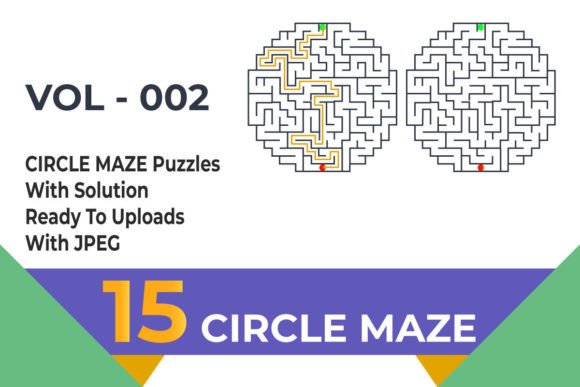
This format influences difficulty in several ways. For some, the diagonal bias can initially disorient, adding a layer of complexity. For others, it can streamline focus, as the paths are forced into a more predictable angular framework. Compared to circular mazes, which offer a radial challenge, diamond mazes provide a middle ground with structured angles but without the radial symmetry. When evaluating puzzle books, the shape is a primary decision factor: it dictates the visual logic you'll employ.
Evaluating a Complete Collection: The 50-Maze Interior
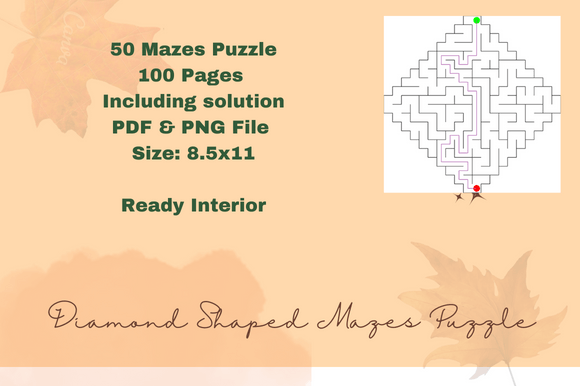
A dedicated volume, such as one containing 50 diamond shaped mazes with solutions, represents a substantial commitment to this specific puzzle type. The value here is in depth and progression. A single diamond maze might be a novelty, but a curated collection of fifty allows for a gradual increase in complexity, variety in pathway density, and exploration of different interior designs within the same diamond boundary. This is a key strength for those who wish to master the format, as repeated exposure trains the brain to adapt to its unique logic.
Comparing this to a mixed-style puzzle book—which might offer a handful of diamond mazes alongside squares, hexagons, and others—the tradeoff is clear. A specialized book offers deep focus and skill development in one area. A generalized book provides variety and prevents potential monotony. The best-fit situation for a 50-maze diamond collection is an adult puzzler who has enjoyed a few diamond puzzles elsewhere and wants to systematically challenge themselves further, or a designer looking for a consistent thematic interior for a publication.
Practical Considerations: Layout, Solutions, and Use Cases
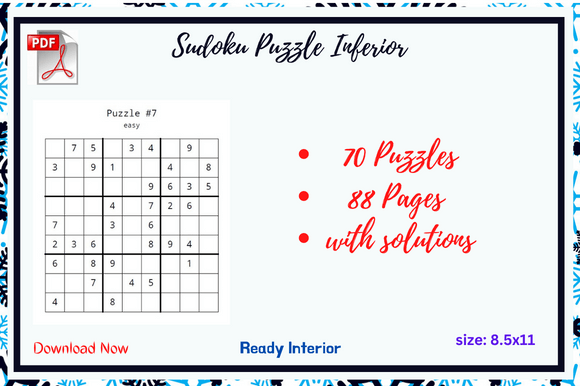
The specifications of a KDP-ready interior, such as 8.5 x 11 inch pages with one maze per page over 100 pages including solutions, speak to practical utility. This layout is optimized for clear printing and comfortable solving. Having a single maze per page eliminates clutter and distraction, which is a significant benefit compared to crammed puzzle books where multiple challenges share a space. The included solutions are crucial for self-guided use, allowing the solver to verify paths without frustration, a feature not always present in more artistic or decorative maze books.
When considering use cases, diamond maze puzzles serve multiple purposes. They are, first and foremost, a leisure activity for cognitive engagement. Their structured geometric nature also appeals to individuals with interests in design, mathematics, or logic patterns. Furthermore, such a collection can be a resource for educators or therapists looking for unconventional spatial reasoning tasks. However, a limitation exists: if the primary goal is sheer variety or storytelling through mazes (like adventure-themed labyrinths), a single-shape book may feel restrictive. In those situations, a book with narrative-driven or multi-shaped mazes would be a better alternative.
Comparing Complexity and Engagement Levels
Not all diamond mazes are created equal. Within a 50-maze set, complexity can vary widely. Some might feature wide paths and simple bifurcations, suitable for a quick, relaxing solve. Others might incorporate dense, fine-line pathways with numerous dead-end branches, demanding intense concentration and tracework. This internal variety is a strength, as it caters to different moods and time commitments.
In contrast to other popular puzzle types like crosswords or Sudoku, diamond mazes offer a purely visual-spatial challenge. They engage the part of the brain responsible for navigation and pattern recognition without requiring lexical or numerical knowledge. This makes them an excellent alternative or supplement for individuals who enjoy visual puzzles over word or number games. The tradeoff, however, is that they typically don't build vocabulary or arithmetic skills. Your choice should align with the cognitive skills you wish to exercise or relax.
When a Diamond Maze Puzzle Book is the Right Choice
A dedicated diamond maze puzzle collection is likely the right resource when you have identified a specific interest in this geometric format and seek a substantial, non-repetitive challenge within it. It is also a practical choice if you require a professionally formatted, ready-to-use interior for publishing purposes. The inclusion of solutions adds a self-contained, user-friendly aspect, making it suitable for both personal enjoyment and potential commercial use.
Realistic examples include an adult purchasing the book for a daily fifteen-minute mental break, a graphic designer using the elegant diamond frames as inspiration for other projects, or a puzzle club adopting it as a themed monthly challenge. The key is that the user values the specialized shape and appreciates having a large number of puzzles in that style at their disposal.
When to Consider Other Options
Despite their appeal, diamond maze puzzles may not be the optimal fit in certain scenarios. If your primary goal is to entertain a broad audience with unpredictable variety—such as in a family puzzle book—a multi-format collection would be more appropriate. Similarly, if you are looking for puzzles that integrate with text, riddles, or stories, a diamond maze book focusing solely on pathways will fall short.
Another consideration is physical size. While the 8.5 x 11 inch format is standard and readable, some puzzlers prefer compact, travel-sized books. In that case, a collection of smaller puzzles, perhaps with smaller diamond dimensions, would be a better alternative. Always evaluate the format, size, and content mix against your intended use environment and audience expectations.
Making an Informed Decision on Puzzle Resources
Choosing any puzzle book involves weighing factors like format specialization, volume, layout quality, and supplementary materials like solutions. For diamond maze puzzles, the distinctive shape is the central feature. Assess whether that geometric novelty is a draw or a potential barrier. Consider how the number of puzzles (50 in this case) matches your commitment level—is it enough for long-term engagement, or too many if you seek only a sampler?
Ultimately, the decision hinges on alignment with your goals. For focused skill development in visual-spatial navigation within a unique constraint, a book of diamond shaped mazes with solutions is a strong, practical option. For broader cognitive stimulation or entertainment that requires changing themes and puzzle types, looking at more diverse collections would be a wiser path. By understanding the distinct nature of the diamond maze, its comparative strengths against other formats, and the practical details of a complete interior, you can select the resource that truly fits your needs as a puzzler, designer, or researcher.