Kuroclone Logic Puzzles: A Journey into Symmetry and Deductive Reasoning
Logic puzzles have captivated minds for centuries, offering a unique blend of entertainment and mental exercise. Among the diverse landscape of puzzle types, Kuroclone presents a fascinating and visually compelling challenge that stands apart. This article delves into the world of Kuroclone puzzles, particularly focusing on the popular 10x10 medium difficulty format, explaining its rules, exploring its cognitive benefits, and highlighting its place in modern puzzle culture for creators and enthusiasts alike.
What Exactly is a Kuroclone Puzzle?
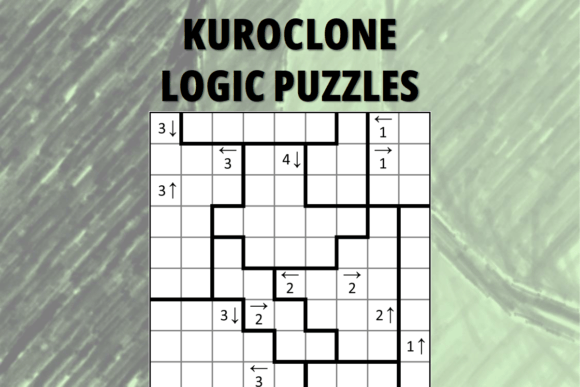
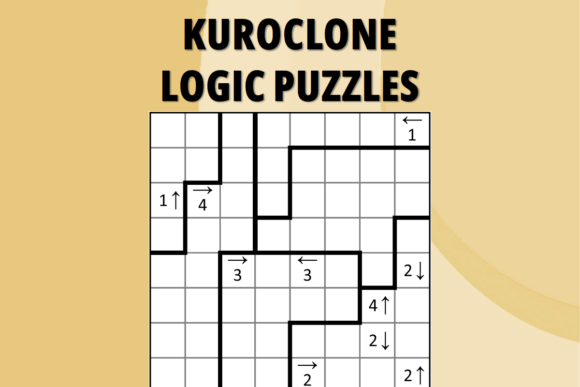
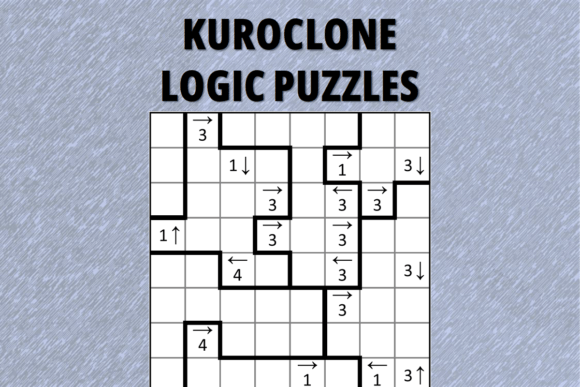
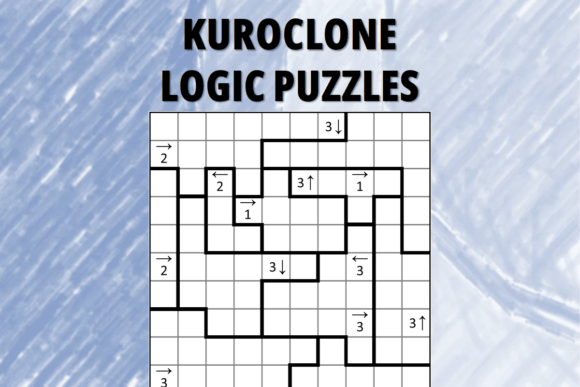
Kuroclone is a grid-based logic puzzle where the solver's objective is to correctly determine which cells should be blackened and which should remain white. The puzzle starts with a grid divided into several distinct regions, each containing a number in one or more cells. Unlike simpler puzzles, Kuroclone introduces a captivating rule of symmetry. The core challenge revolves around painting the grid while adhering to a set of specific and interconnected constraints.
The Five Foundational Rules of Kuroclone
To successfully solve a Kuroclone puzzle, you must follow these five key rules:
- Grid Painting: The solver must blacken some cells of the grid. The remaining cells are considered white. Often, the starting grid has gray cells, and your task is to color each gray cell either black or white.
- Group Formation: Orthogonally contiguous black cells (cells touching side-by-side, not diagonally) form a single group. A group is a cluster of connected black cells.
- The Rule of Symmetry: This is the defining feature of Kuroclone. Each region on the grid must contain exactly two groups of black cells. Furthermore, these two groups must be congruent. Congruent means they must have identical size and shape. Crucially, the congruence can also be satisfied if one group is the mirror-image (reflected shape) of the other.
- Numbered Cells and Arrows: A cell containing a number is always white. This number cell also has an arrow. The arrow points to an adjacent cell (orthogonally adjacent) that belongs to one of the two black groups within that same region. The number itself indicates the total size—the number of black cells—of that specific group the arrow is pointing towards.
- Region Border Constraint: Black cells must not be orthogonally adjacent across region borders. This means you cannot have a black cell in one region directly touching a black cell in a neighboring region. They can be diagonally adjacent, but not side-by-side.
Walking Through a Simplified Example
Imagine a small 4x4 grid split into two rectangular regions. One region has a cell with the number "2" and an arrow pointing left. Applying the rules step-by-step:
- The numbered cell is white, as per rule 4.
- The arrow points left to a cell that must be part of a black group in that region, and that group's total size must be 2 cells.
- Since the region needs two congruent groups (rule 3), you now know one group is size 2. The other group in the same region must also be size 2 and have the same (or mirrored) shape.
- You start placing black cells to form these two identical groups of two cells, ensuring they are not connected to each other (as they are separate groups).
- You also check that no black cell touches a black cell in the other region across the border (rule 5).
This logical deduction, starting from the numbered clues, propagates across the entire grid, creating a satisfying solve where the final picture reveals two symmetrical black patterns in each area.
The Purpose and Significance of Kuroclone Puzzles
Kuroclone puzzles serve a dual purpose: they are a source of deep recreational enjoyment and a powerful tool for cognitive development. Their significance lies in the specific mental skills they engage and refine.
Cognitive Benefits and Mental Exercise
Solving Kuroclone puzzles is not merely a pastime; it's a workout for the brain. It strongly engages:
- Spatial Reasoning: Visualizing and manipulating shapes, understanding congruence, and planning pattern placement within confined regions.
- Deductive Logic: Each clue (the numbered arrow) provides a strict constraint. Solvers must use these facts to infer the state of other cells, often employing techniques akin to sudoku or nonogram logic.
- Pattern Recognition: Identifying how shapes can be identical or mirrored within a region is central to the solve.
- Attention to Detail: The rule about adjacency across borders requires careful scrutiny of the final grid, training precision and focus.
Regular engagement with such puzzles can help maintain and improve these cognitive faculties, which are transferable to problem-solving in daily life and professional contexts.
Clarifying Common Misunderstandings
Two aspects of Kuroclone often cause initial confusion. First, the congruence rule does not require the two groups to be oriented the same way; a mirrored shape is perfectly valid. This expands the possibilities for shape formation. Second, the arrow does not point to the numbered cell's group; it points from the numbered cell to an adjacent cell that belongs to one of the groups. The number describes that group's size, not the distance or direction of the arrow.
Kuroclone in Modern Puzzle Culture and Publishing
The format of 10x10 Kuroclone puzzles with Medium difficulty has found a particular niche. It offers a substantial challenge without being overwhelmingly complex, making it ideal for a wide audience. This balance is why it is a popular choice for puzzle books, digital apps, and especially for creators publishing through platforms like Amazon KDP (Kindle Direct Publishing).
For KDP interior content, a collection of 50 unique 10x10 medium puzzles provides excellent value. The file format specification of SVG (Scalable Vector Graphics) at a high quality like 8072 px ensures the puzzles are crisp, scalable, and perfect for both print and digital use. SVG files maintain perfect lines and clarity at any resolution, which is crucial for puzzle grids where cell boundaries must be unambiguous.
Fostering Creativity and Technological Engagement
From a creator's perspective, designing Kuroclone puzzles is an act of creative logic. It involves crafting regions, placing numbered clues, and ensuring a unique and solvable puzzle emerges. This design process itself is a rewarding puzzle. Technologically, the use of SVG formats aligns with modern digital publishing, allowing puzzles to be easily integrated into websites, apps, and print-on-demand services, bridging traditional puzzle solving with contemporary digital distribution.
How Kuroclone Fits into Daily Life and Learning
Beyond dedicated puzzle books, Kuroclone's principles of symmetry and constraint-based logic resonate in broader contexts. In education, similar logical frameworks are used in computer science (constraint satisfaction problems) and mathematics (geometry and symmetry studies). In daily life, the patience and systematic approach cultivated by solving such puzzles can improve one's method for tackling complex tasks, from planning a project to organizing information.
For the general reader looking for a clear understanding, Kuroclone represents more than a game. It is a structured system where clear rules lead to a definite, beautiful solution. It teaches that from a set of limited clues, a complete and orderly picture can be deduced—a reassuring metaphor for navigating information-rich, sometimes chaotic, modern environments.
Embracing the Challenge
Whether you are a puzzle enthusiast seeking a new challenge, a KDP creator looking for engaging interior content, or simply someone interested in exercises that sharpen the mind, Kuroclone logic puzzles offer a rich and rewarding experience. The 10x10 medium grid is an excellent starting point, providing a manageable canvas for the intricate dance of symmetry and logic defined by its five elegant rules. By understanding the foundations and appreciating its significance, you can unlock not just the solutions to individual puzzles, but a deeper appreciation for structured thought and pattern.